

Table of Contents
- How Do Dog Brands Support Rescues? The Big Picture
- Dog Brands That Donate to Animal Shelters: The Main Models
- Pet Product Donations to Shelters: Food, Supplies, and Medical Care
- Pet Brand Charitable Giving: Discounted Food, Wholesale, and Fundraising
-
How to Partner With an Animal Rescue: A Practical Playbook
- Step 1: Confirm the rescue's eligibility before pitching
- Step 2: Match the ask to the program type
- Step 3: Run due diligence on the brand
- Step 4: Put the agreement in writing
- Step 5: Report results in the brand's language
- Step 6: Review and exit cleanly
- What a strong rescue partnership should include
- How to Tell If a Dog Brand Genuinely Supports Rescues
- Ways Customers and Rescues Can Help Beyond Buying
- Conclusion
- Frequently Asked Questions
Last Updated: October 21, 2026
How Do Dog Brands Support Rescues? The Big Picture
Dog brands support rescues through purchase-linked giving, product donations, wholesale pricing, and direct sponsorship. This guide from The Swell Dogs breaks down each model so you can tell a real program from a marketing line.
Most shoppers assume a "we give back" banner means cash flowing to a shelter. Often it means surplus inventory. That distinction matters: rescues need food, medicine, crates, and money for veterinary bills.
Dog Brands That Donate to Animal Shelters: The Main Models
Donation programs fall into two categories: purchase-linked giving, where a sale triggers a contribution, and direct giving, where the brand funds or supplies a rescue independent of any transaction. Knowing which one you're looking at tells you almost everything about how much support reaches the shelter.
Purchase-Linked Giving and Buy-One-Give-One Programs
Purchase-linked giving ties a contribution to a specific sale.
The mechanics vary more than the marketing suggests.
At The Swell Dogs, 10% of proceeds from every purchase goes to local rescues, proceeds rather than a flat per-item figure, so the contribution ties to real revenue.
Buy-one-give-one works best for durable goods: a donated leash or bed has a long shelf life at a shelter, while a donated bag of treats does not.
Direct Donations and Sponsorships
Direct donations skip the transaction entirely. The brand writes a check, funds a specific medical case, or sponsors an event like a adoption fair or a fundraising 5K.
Sponsorship is the more interesting category: a brand might cover a shelter's adoption event, supply branded gear for volunteers, or underwrite a transport run for displaced dogs.
This model favors rescues with existing visibility. A group with a strong social following can attract sponsors; a small foster-based rescue usually cannot, which is why so many rely on product donations instead.
Pet Product Donations to Shelters: Food, Supplies, and Medical Care
Product donations are the backbone of most brand-rescue relationships, and they cover far more than food.
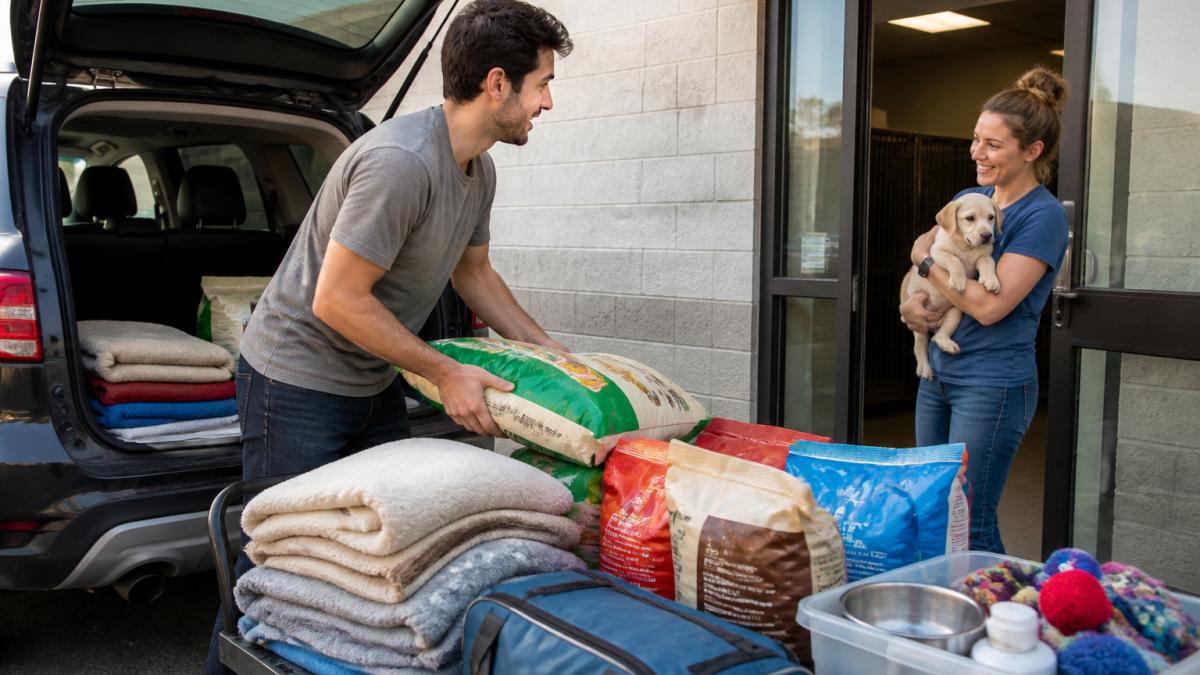
Food donations get the headlines, but the reality is messier.
Medical care is where product donations fall short: a bag of kibble doesn't pay for a dental extraction or heartworm treatment.
Supplies carry their own restrictions. Some shelters can't accept used items for biosecurity reasons. Others lack storage for bulk deliveries.
Pet Brand Charitable Giving: Discounted Food, Wholesale, and Fundraising
Discounted and wholesale food programs solve a problem donations can't: predictability.
These programs are less common than donation drives because they cost the brand margin rather than inventory. That's precisely why they signal serious commitment.
Fundraising support takes another shape. The IRS guidance on charitable solicitation and disclosure is worth reading if you're a rescue evaluating whether a brand's fundraising offer is structured correctly.
The ASPCA's shelter and rescue resources also outlines how rescue organizations typically structure their intake and placement work, which helps explain why flexible funding beats restricted gifts.
| Support Model | What the Brand Provides | Best For | Main Limitation |
|---|---|---|---|
| Purchase-linked giving | Share of revenue per sale | Ongoing, predictable funding | Tied to sales volume |
| Buy-one-give-one | Matching product donation | Durable goods like leashes, beds | Doesn't fund medical care |
| Direct donation or sponsorship | Cash, event funding, transport | Rescues with visibility | Competitive, few slots |
| Product donation | Food, supplies, crates | Day-to-day shelter operations | Inconsistent supply, no cash |
| Wholesale or discounted food | Reduced pricing for rescues | Budget planning | Requires 501(c)(3) status |
| Fundraising support | Events, prizes, audience access | Awareness and adoption | Variable, campaign-based |
How to Partner With an Animal Rescue: A Practical Playbook
Most guides tell rescues to "reach out to brands" and stop there. That advice fails at the first email, because brand giving programs are gated by eligibility rules, application windows, and internal budget cycles rescues never see. This section is for the rescue operator and the brand partnerships manager who has to make an arrangement actually work.
Step 1: Confirm the rescue's eligibility before pitching
Most corporate giving programs require 501(c)(3) status and an IRS determination letter. Some brands accept 501(c)(3) applications only; others work through a fiscal sponsor or community foundation, and a few run employee-driven programs requiring nomination by a staff member. Before pitching, confirm:
- Current 501(c)(3) determination letter on file and a current Form 990 available
- A named contact with authority to sign an agreement
- A bank account in the organization's legal name for cash gifts
If the rescue is foster-based with no kennel, say so up front. Many product programs assume a physical shelter with dock access, and a mismatch wastes both sides' time.
Step 2: Match the ask to the program type
Brand support is not interchangeable. A rescue that needs surgery funding should not chase a buy-one-give-one partner, and one that needs monthly kibble should not spend months pursuing event sponsorship. Use this mapping:
| Rescue need | Program to target | What to expect |
|---|---|---|
| Veterinary bills, emergency medical | Direct donation, grant, or sponsorship | Cash, often restricted to a named case or a defined purpose |
| Monthly food volume | Wholesale or discounted food program, recurring product donation | Standing order at reduced cost, or scheduled shipments |
| Crates, bedding, bowls, cleaning supplies | Product donation, wishlist fulfillment | In-kind goods, sometimes mixed brands and formulas |
| Adoption event costs | Event sponsorship, fundraising support | Cash or in-kind, often tied to brand visibility |
| Transport of displaced dogs | Sponsorship or operational grant | Fuel, vehicle, or per-animal transport funding |
| Operational costs (rent, utilities, staff) | General operating grant | Least common and most competitive |
Step 3: Run due diligence on the brand
Rescues should evaluate the brand as carefully as the brand evaluates them. Ask for written terms, not a verbal summary. Confirm whether the commitment is cash, product, or services, whether it's one-time or recurring, and what the brand expects in return, logo placement, social posts, event appearances, or use of the rescue's name in marketing.
A practical due-diligence file includes:
- The program's written guidelines and any application form
- The named brand contact and their role
- The donation mechanism (percentage of revenue, percentage of profits, units per sale, or fixed amount)
- Any annual cap, minimum, or geographic restriction
- The delivery or payment schedule
- Reporting obligations on both sides
- A termination clause and notice period
Step 4: Put the agreement in writing
A workable agreement names what the brand gives, what the rescue provides, how both sides measure success, and when the arrangement ends. Keep it short: contribution (amount, form, schedule), recognition requirements, reporting cadence, a review date, and an exit clause.
Step 5: Report results in the brand's language
Brands renew programs that produce numbers they can use. Rescues should track meals provided, animals served, veterinary cases funded, adoptions completed, and volunteer hours, then share a simple quarterly summary. Verified outcomes persuade better than promotional claims and give the brand a defensible story for its own reporting.
Step 6: Review and exit cleanly
Ninety days in, both sides should assess whether the arrangement delivered what was promised. If it did not, a clean exit clause protects the rescue from a sudden funding gap and preserves the relationship for a future cycle.
What a strong rescue partnership should include
A strong partnership includes four elements: a defined contribution, a delivery schedule, mutual recognition terms, and a measurement method. Miss any one and the arrangement drifts into vague goodwill. Before signing, ask: Is the contribution cash, product, or services? One-time or recurring? And what does the brand expect in return?
How to Tell If a Dog Brand Genuinely Supports Rescues
Genuine support is verifiable, specific, and consistent, and you can usually confirm it in under ten minutes. Vague support is emotional, photogenic, and impossible to pin down. The difference is in the terms the brand publishes and the terms it avoids.
Read the donation mechanism, not the slogan
The single most useful question is whether the contribution is tied to revenue, to profit, to units, or to nothing at all. Each mechanism behaves differently when sales dip or costs rise:
- Percentage of revenue scales with every sale and is the most predictable for a rescue partner.
- Percentage of profits can fall to zero in a loss year, and profit is defined by the company, not the donor.
- Fixed amount per item is easy to verify but does not scale with price increases.
A brand that will not say which mechanism it uses is telling you something. Assume the vaguest interpretation applies until the terms say otherwise.
Check the caps, minimums, and eligible products
Most purchase-linked programs carry an annual cap, a minimum sales threshold, or a product restriction. A "we donate 10% of proceeds" claim may apply only to a single SKU, only during a campaign window, or only up to a stated ceiling. Look for:
- The annual or campaign cap, and whether it has been reached
- Whether the donation applies to all products or a named subset
- Whether shipping, taxes, and returns are excluded from the calculation
Verify the partners and the reporting
A brand that names its rescue partners publicly, with links, is easier to verify than one citing "local shelters." A two-line email to the rescue asking whether the partnership is current settles it faster than any About page.
Reporting matters too. A brand that publishes an annual giving summary, even a short one, gives shoppers and rescues something to check. One that reports only in social posts is asking for trust without evidence.
Run this checklist on any brand claiming to help rescues
- The brand names its rescue partners publicly, not just "local shelters"
- The donation mechanism is stated precisely (percentage of revenue, units per sale, fixed annual commitment)
- The brand discloses whether the contribution is cash, product, or both
The FTC's guidance on advertising and endorsement claims applies here. A brand making a charitable claim in its marketing is making a factual assertion, and it should be able to back it up. The IRS guidance on charitable solicitation and disclosure is also worth reading if you are a rescue evaluating whether a brand's fundraising offer is structured correctly.
Ways Customers and Rescues Can Help Beyond Buying
Non-purchase support often delivers more per dollar of effort than a sale ever will.
Customers can volunteer at adoption events, donate from a shelter's wishlist, foster a dog to free up kennel space, or share adoptable dogs in local groups.
Community partnerships also work at the neighborhood level. The Humane Society's volunteer and foster guidance covers how fostering reduces shelter intake pressure, which is the single most useful thing most people can do.
Brands can support this without spending on inventory. Amplifying a rescue's adoption posts costs nothing and reaches an audience the rescue doesn't have.
Conclusion
The gap between a brand that genuinely funds rescue work and one that borrows the language is visible in the details: named partners, stated percentages, and a program that survives past one campaign.
At The Swell Dogs, we built the giving into the product. Ten percent of proceeds from every purchase supports local rescues, our breed-specific tees and hoodies are artist-curated, and our storybook adventures and plushies give dog lovers another way to celebrate their breed.
Frequently Asked Questions
How do dog brands support animal rescues?
Dog brands support rescues through several channels: direct donations of food, supplies, and money; purchase-linked giving where a percentage of sales goes to rescue partners; buy-one-give-one programs; discounted or wholesale food for shelters; and sponsorship of events or specific rescue dogs. Many brands also fund veterinary care and medicine. The mix varies by company size, so check whether a brand publishes its rescue partners and the share of proceeds it gives.
Do dog brands donate a portion of sales to animal shelters?
Some do, but not all, and the amounts vary widely. Purchase-linked donation programs typically pledge a fixed percentage of each sale or a set dollar amount per item to a named rescue partner. Others run seasonal campaigns, such as donating proceeds during adoption events. Ask the brand three questions: which rescue receives the money, what percentage or amount is given, and how often donations are made. Brands that answer clearly are usually the ones with real programs rather than marketing claims.
How can a small dog brand partner with a local rescue?
Start by identifying rescues in your area and reaching out with a specific proposal rather than a vague offer to help. Suggest a concrete arrangement, such as donating a percentage of sales for one month, supplying food for a specific number of dogs, or sponsoring an adoption event. Agree on what each side provides, how the rescue will be credited, and how results will be reported. A written one-page agreement protects both sides and makes the partnership easier to repeat or expand later.
What kinds of donations do pet brands make to shelters?
Common donations include pet food, treats, leashes, collars, beds, blankets, crates, toys, and grooming supplies. Some brands fund veterinary care, medicine, or spay and neuter programs. Others donate products for fundraising auctions or provide gift cards that rescues can raffle. Food is often the most requested item because shelters feed dozens of dogs daily, and supply donations help rescues redirect limited budgets toward medical care and adoption support.
How can I tell if a dog brand genuinely supports rescues?
Look for named rescue partners, published donation terms, and consistent giving over time rather than one-off posts. A genuine program usually states what percentage or amount is donated, which organizations receive it, and how often. Check the rescue's own website or social media for acknowledgment of the brand. Be cautious of vague claims like helping animals without specifics. Brands that share impact updates, such as how many meals or vaccinations were funded, tend to be more transparent than those that only use rescue imagery in marketing.
How can customers help dog brands support animal rescues?
Buy from brands that publish clear rescue partnerships, and tell them you chose them for that reason, since customer feedback shapes future giving. Share their donation campaigns on social media, and ask about programs like rounding up at checkout or donating a product at purchase. You can also volunteer or foster with a local rescue directly. When brands see that rescue support drives sales, they tend to expand those programs, so your purchase and your feedback both matter.